We back early-stage founders (pre-seed to seed) with $500K–$1M checks, often before a product or revenue. If you’re building something really cool in fintech, defense, cyber, logistics or automation etc — I want to hear from you!

Over the past twenty years, enterprise software has evolved from simple data storage into a global infrastructure for managing and visualizing information. The first generation, often called SaaS 1.0, focused on reliability, scalability, and accessibility. Platforms like Salesforce, Tableau, and HubSpot organized data and displayed it through dashboards, giving managers a clear view of what was happening in their organizations. These systems were excellent at tracking the past—but they weren’t designed to create or predict the future.
By 2024, the SaaS market reached roughly $266 billion, with forecasts showing growth to over $1.1 trillion by 2032 (Fortune Business Insights, 2024). That expansion, however, exposed the limits of a system built on static data visualization. Software could show what was happening, but it couldn’t take action on its own.

https://x.com/a16z/status/1982484887342129412
Global SaaS revenue: $266B (2024), projected $1.1T (2032)
Focused on: structured inputs, stable architecture, and accessible dashboards
Limitation: systems explained what happened, not what to do next
From Display to Production: The Rise of Computational Manufacturing
Artificial intelligence has completely changed how software creates value. Large language models (LLMs) and multimodal systems have shifted software from tools of representation to tools of production. Software is no longer passive—it builds, generates, and executes. We’ve entered what could be called the manufacturing era of computation, where AI systems transform raw inputs into finished outcomes.
AI now ingests text, images, and sensor data, processes them in real time, and generates outputs like insights, strategies, or creative assets. These systems no longer need humans to interpret dashboards; they produce results directly. Just as the Industrial Revolution mechanized manual labor, the AI Revolution is mechanizing cognition.

AI market growth: $279B (2024) → $3.5T (2033), 31% CAGR (Grand View Research)
78% of companies now use AI in at least one function (McKinsey, 2024)
AI-driven productivity gains could exceed $3.8T by 2035 (Accenture Economics Lab)
Digital Factories: How AI Systems Produce Intelligence
AI systems now act like digital factories—turning data into intelligence. They connect data pipelines, models, and feedback loops to generate and refine their own outputs. Instead of static dashboards, modern AI platforms operate like dynamic production lines that continuously improve with experience.
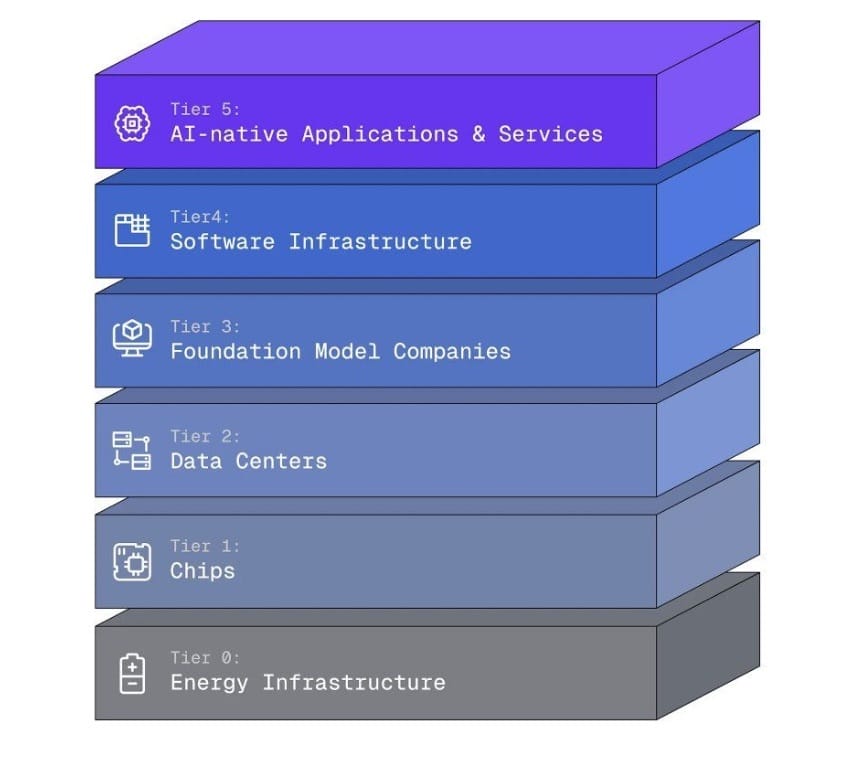
In traditional manufacturing, factories depend on materials, machinery, and process control. The AI equivalent uses:
Data quality as raw materials
Model design as machinery
Feedback systems as quality control
This process starts with data inputs—documents, transactions, APIs, or sensor readings—and ends with usable outputs like forecasts, reports, or automated actions. When those outputs are reintroduced into the system for refinement, the software begins to learn from itself. This reflexive loop allows AI systems to evolve faster than human-coded software ever could.
Iteration: The Engine of Innovation
Under the old SaaS model, success meant reliability and uptime. In the AI manufacturing model, success depends on learning speed. The faster a system can process feedback, retrain its models, and produce improved results, the stronger its competitive edge becomes.
Companies like OpenAI, Anthropic, and Google update their models thousands of times per week. In large enterprises, about 60% of AI budgets now go toward managing data pipelines and feedback loops instead of pure compute (McKinsey, 2024). Iteration has become the foundation of innovation.

Slow then all at once!
Key metric: learning velocity, or how quickly a system improves over time
Continuous iteration compounds intelligence and drives differentiation
Innovation now means ongoing improvement, not annual releases
New Moats in the Manufacturing Era
The competitive advantages of software companies are changing. In SaaS 1.0, companies competed on data ownership and user lock-in. In AI 2.0, they compete on their ability to manufacture outcomes. The most valuable companies will be those that can turn data into autonomous actions and measurable results.
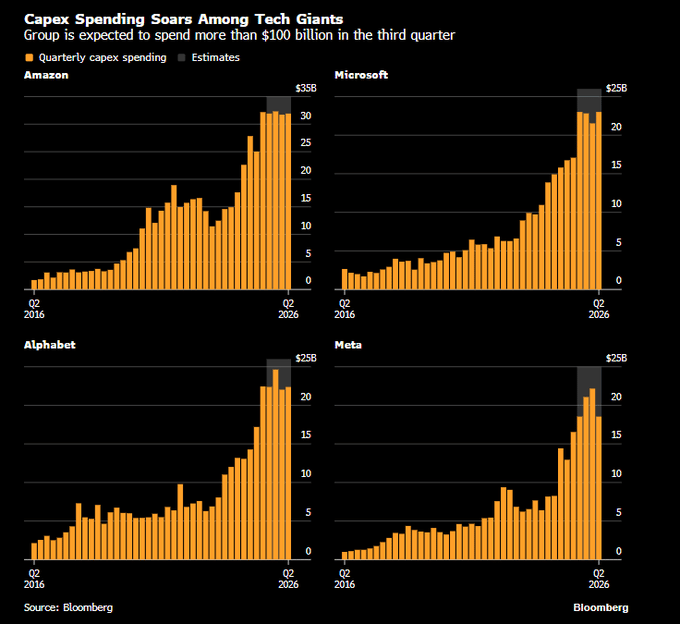
Example: A CRM that predicts churn and automates outreach is far more valuable than one that only shows metrics
Example: A cybersecurity tool that automatically prioritizes and fixes threats is more powerful than one that simply lists them
The new moat: data orchestration, prompt optimization, and feedback refinement
In short, value no longer lies in what a company stores, but in what it can continuously produce from that information.
Building the Factory Mindset
To succeed in this new era, every company must build its own digital factory. This requires rethinking not only technology, but also culture, processes, and incentives.

Data as raw material: High-quality, diverse data leads to better outcomes
Models as machines: Algorithms must be tuned and retrained regularly
Feedback as infrastructure: Continuous monitoring and improvement must be built in
Iteration as a KPI: Track progress through cycles of improvement, not static versions
This shift also changes how organizations think. Instead of supporting decisions, software should make them. The goal is to move from dashboards that describe what’s happening to systems that design and execute what should happen next.
The Reindustrialization of Intelligence
We are witnessing a complete reindustrialization of software. SaaS 1.0 optimized for clarity and scale; AI 2.0 optimizes for creativity, adaptability, and automation. The companies that dominate the next decade will be those that learn, iterate, and manufacture intelligence at scale.
Software once described the world. Now, it builds it. The next generation of trillion-dollar enterprises won’t just store data—they’ll operate the factories of intelligence that shape the future.
And that’s what I’m investing in!
startup insights, stories, and vibes sent to your inbox
mail.bigdeskenergy.com/subscribe?_bhba=a912eba6-7a35-4c1b-a9cb-9721b5c72389
High-quality startups delivered straight to your inbox
www.venturescout.io/subscribe?_bhba=a912eba6-7a35-4c1b-a9cb-9721b5c72389
Startups who switch to Intercom can save up to $12,000/year
That's like having a full-time human support agent at no cost.
What’s included?
6 Advanced Seats
Fin Copilot for free
300 Fin Resolutions per month
Who’s eligible?
Intercom’s program is for high-growth, high-potential companies that are:
Up to series A (including A)
Currently not an Intercom customer
Up to 15 employees
Click to Share
Terms of Service